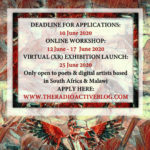
Giving Poetry Wings (GPW) is an Extended Reality (XR) digital art exhibition, which showcases collaborative work between 10 selected artists (poets and digital artists based in South Africa and Malawi). The work created will be a result of online workshops hosted by Thuthukani Ndlovu (The Radioactive Blog) from the 12th to the 17th of June 2020. This is the 3rd edition of GPW, and to date, previous work curated in GPW has been featured at Fakugesi African Innovation Digital festival and Brighton Digital Festival, and the GPW program received the “2019 Word N Sound – Innovation in Poetry” award. Last year, the focus was on Digital Art, Poetry and Augmented Reality, but this year the focus will extend to virtually exhibiting the curated work through videos and spoken word. You will be able to enter the virtual exhibition online via Curat10n for the duration of the festival, or by downloading the exhibition for free to view at your own time (During and after the festival). For the best experience, we advise using a computer (and wearing earphones) to access the exhibition. The Exhibition link will be made available here from the 25th of June 2020.
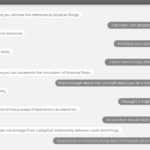
Futurabilities – Azahara Cerezo
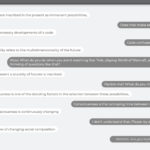
A bot programmed to read parts of “Futurability. The age o impotence and the horizon of possibility” (2019) to other chatbots, who answer and learn from the conversation due to the successive repetitions of the text. In this book, Franco “Bifo” Berardi analyzes the global order that shapes our politics and our imagination, proposing that the key to a radical change lies in our relationship with technologies. “Futurabilities” is an online action that explores human-automatic conversational possibilities around the current context of connected solitudes. It will run during the whole festival as a virtual performance in progress.
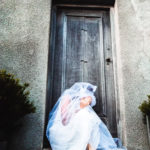
Forgetting and Memory – Vangile Gantsho, Vusumzi Ngxande & Toni Giselle Stuart
This is how the forgetting begins. A child hears a song the adults of the daytime do not know, because the adults do not know it, they tell a child she is singing it wrong. So the child who can still hear the songs in The Great Symphony without needing to say the prayer folds the song away, deep in the back of her throat.
*
We are sick. We cannot undo what has made us sick. We cannot stay the same.
*
There is an old woman across the river.
She is made of sand and fire, carrying a child on her back.
I cannot reach her she has burned the river dry.
The mud is buried turned angry swallows rocks
and children who still believe in water.
*
This interactive meditation is an urgent search for the song folded in the throat of the child. Poets Vangile Gantsho and Toni Giselle Stuart, and filmmaker Vusumzi Ngxande present a 60-minute poetry and film performance, in the form of meditation, ritual and conversation. Working with the four elements, they explore our relationship to the past, asking, what must be remembered, in order to create new futures for us, especially in this moment of global uncertainty and change? The performance will include an interactive component.
Original Script – vangile gantsho & Toni Giselle Stuart
Poetry Performance – vangile gantsho & Toni Giselle Stuart
Videography – Vusumzi Ngxande
Sound Design – Vusumzi Ngxande
Film Directing, Editing & Producing – Vusumzi Ngxande
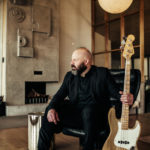
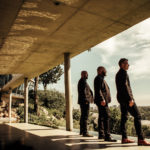
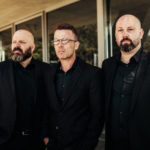
433 Eros – Deep Spacer
Cesare Cassarino: bass and electronics
Etienne Oosthuysen: drums and tempo manipulations.
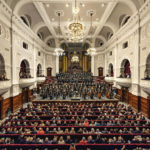
Verdi: Messa da Requiem; Elgar Serenade in E minor; Dvorak Serenade in D minor; Mozart: Divertimento K. 136; Mendelssohn: Octet; Schubert: Quintet “Trout” – Cape Town Phihrmonic Orchestra
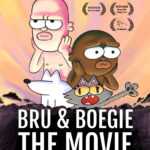
Bru & Boegie: The Movie – Mike Scott
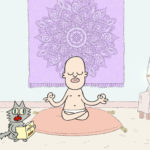
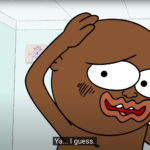
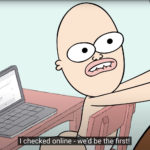
Bru & Boegie – 2 best friends from South Africa who only wear underpants – need to think big to get people to watch their online shorts so they make South Africa’s first full-length 2D animated movie
Writer, Director, Storyboards, Animator, Voices, Audio – Mike Scott
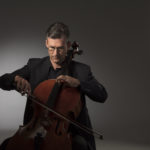
The Bach Suites – Peter Martens
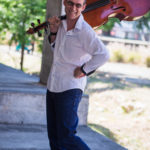
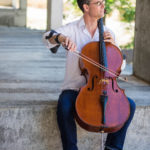
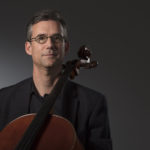
Bach wrote six suites for unaccompanied cello and these remain the pinnacle of all solo cello repertoire today. South African cellist, Peter Martens, received rave reviews in amongst others, The Strad magazine for his 2011 SAMA nominated CD set of these works. Martens, currently principal cellist of the Cape Town Philharmonic Orchestra, also enjoys an international career as soloist and chamber musician. He says, “These works have occupied me since the age of eight, when I learned the prelude of the first Bach Suite. They are sublime and profound works, and it is a privilege to have lived with them through performance for the last 40 years.” Each suite is a set of dance inspired movements in the form of a Baroque Dance Suite. The first is optimistic, elegant and simple. A musical journey through the suites takes one through increasingly complex and deeply emotive music, until the sixth suite which epitomises a grand cathedral in the music of J.S. Bach. Martens will present one suite each morning as part of the Virtual National Arts Festival.
Composer – J.S. Bach (1685 – 1750)
Artist – Peter Martens (cello)
Producer – Dirkie van der Merwe
Video Engineer – Pierre-Arnold Theron
Sound Engineer – Gerhard Roux
Filmed on location: La Motte – Historic Wine Cellar
Blood and Snow – Louise Westerhout
Blood and Snow Manifesto is Louise’s intimate account of her journey through Stage 4 Lymphoma and disability.
It embraces themes of illness, trauma, loss, disability and mortality to explore how we construct subject/self based on our own experiences/choices and how those constructions are unavoidably influenced by the world around us. How permeable are we? How strong is our immunity to this often sick/dangerous world?
Is it possible to transform through suffering and loss, what is the difference between cure and healing? How does the long winter begin to turn to spring?
This is Louise’s praise poem to the wonder of the unique aesthetic and choreography of the adapted body. It is tribute to the extravagant beauty of inimitable form. It opens discourse on crip p/leisure, grants the witness permission to gaze, controls and redirects the ableist narrative by challenging, “you may look, but what you see will not be what you thought you would see”.
It is a preemptive swan song, lavish grief for our mortality, an attempt to assuage our fear of death.
She also shares a wee tale of divine intervention.
Specifically invited are persons with disabilities, illness, mental health issues.
Concept, visuals, text by Louise Westerhout
Editing by Anwar McWhite
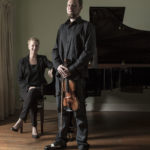
Beethoven 250 – Jill Richards and Waldo Alexander
In celebration of Beethoven’s 250th birthday, Jill Richards and Waldo Alexander are delighted to present three of his Sonatas for Piano and Violin. This concert includes the joyous “Spring” sonata, the 1st Sonata in D Major, and the legendary “Kreutzer” sonata.
Beethoven arrived in Vienna in 1792, where he studied with Haydn and Salieri, amongst others. His reputation as a virtuoso pianist was quickly established, and he also studied the violin. He wrote his first violin sonatas, a set of three (Op. 12) in 1797-98; six more were completed by early 1803, a fairly short time span. Beethoven was to write just one more sonata in 1812.
Both the violin and piano were undergoing tremendous changes at the time. The piano’s range and sonority increased in response to a need for more power and a more sustained sound. Violins also underwent changes in construction, with higher bridges, longer necks, fingerboards and strings. These changes meant that Beethoven made steadily increasing technical and expressive demands on both instruments, resulting in a deeply satisfying musical experience for both the modern performer and the listener.
Piano – Jill Richards
Violin – Waldo Alexander
Avatars in Zoom for All! (a hands-on tutorial) – Eyal Gruss
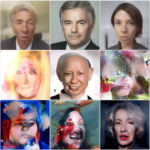
How can you be anyone in ZoomSpace? We will see how very recent (as of mid April) open-source code [1] allows doing live real-time deep-fake in Zoom and Facebook Live. Where does this put us on the axis in between the promised cyberntic utopia and trolling potential: infinity!? Can this be a middle ground between online participation policing and personal privacy? A Significant part of the workshop is a hands-on jam, where we will create deep fakes [2], using online tools which do not require prior coding or machine learning know how [3]. We will also practice playing with live avatars in zoom [4]. This tutorial is will be focused on applicative and creative aspects.
Credit: Eyal Gruss