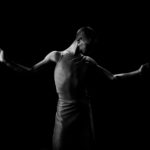
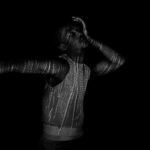
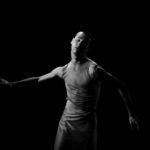
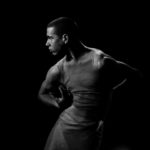
META | m o r p h – Darkroom Contemporary

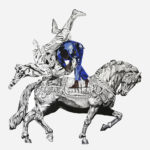
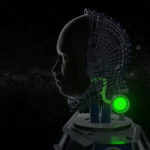
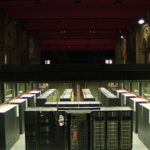
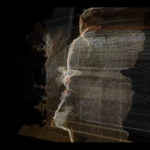
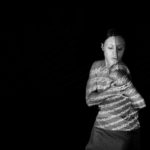
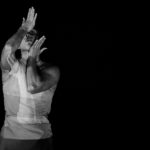
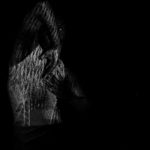
At the intersection between art and technology, META | morph speaks to digital disruption and its effects on our human experience, today and in the near future. Digital and virtual connections weave us together, creating new modes for connection, while simultaneously causing isolation. The work immerses the viewer in a dreamscape where the dialogue between real and virtual, human and digital, collides indefinitely.

Concept & Direction: Inka Kendzia & Louise Coetzer
Music: Brydon Bolton, Mr Sakitumi, Shane Cooper, Matthijs van Dijk
Choreography: Louise Coetzer
Projection Art, Visual Effects & Compositing: Inka Kendzia
Performed by: Christopher Sherwood – Adcock, Farnel Smart, Mukovhe Monyai, Carla Scholtz, Gabriel Mehlomakhulu
Lidar Scan & 3D: Jason Stapleton
Videography: Oscar O’Ryan & Inka Kendzia
Edit: Oscar O’Ryan
Coding: Lasse Manson
Who Do We Come to H(a)unt – Marcio Carvalho

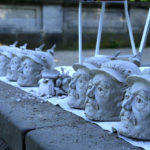
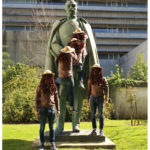
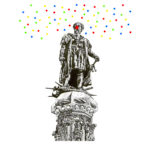
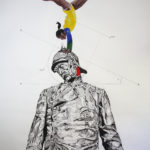
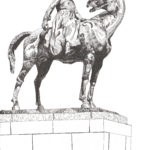
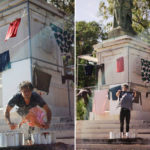
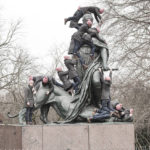
WHO DO WE COME TO H(A)UNT is an interactive art project that uses drawing to disrupt the memorial culture advertised by statues, monuments and memorials of colonial and imperial rulers still standing today in many cities around the globe. Anybody from any geography can use this project as a healing site where alternative stories can be draw and told and where old hegemonic histories can be re-customized.

Creator: Marcio Carvalho
Drawings by: Marcio Carvalho in collaboration with a wider audience
Design: Joana Silva
Web developer: Dinis Simões

PGPoetry – Yoav Lifshitz


Emergency Poetry New Coronavirus 2020 as published Narrated by Hearat Shulaym Independent Journal for Contemporary Art
PGPoetry (Pretty Good Poetry) celebrates the aesthetic, poetic, and political possibilities of PGP (Pretty Good Privacy) encryption protocol. Using PGP encryption protocol, I create abstract random poetry, readable only for the eyes of a specific recipient, and of spying agencies (if they can decrypt them). For the rest of the world, the poems are basically digital Rorschach inkblot, and its meaning, as in every piece of art – depends on the audience’s interpretation (interpretation is decryption!). With the rise of state surveillance during the COVID-19 pandemic, this project is more relevant than ever. PGPoetry workshop is an algorithmic poetry workshop which is also a crypto party for emergency times. In the workshop, the participants will try to figure out (and probably fail) how to read these poems, while I put them in the context and tradition of digital poetry and encrypted poetry, and their artistic value. Then, I will teach the participants how to use PGP protocol, and guide them as they experiment with creating pretty good poetry.
Artist: Yoav Lifshitz

Something from nothing: recording music with no instruments and a cellphone – Chris Jeffery

Music creation in the digital age has become more accessible than ever. But it’s an activity still associated with owning lots of gear – soundcards, speakers, preamps, mixing desks, microphones, sonically treated spaces, expensive software, etc. We also obsess over a limited inventory of sounds: guitars, drums, saxophones, orchestral instruments. All this gear and all these instruments will always have a place in music-making. Yet they can also become a reason not to make music, convincing us that until we reach some (ever-receding) level of professional equipment, we can’t start creating.
This project, which was catalyzed by the Covid-19 lockdown, aims to challenge that narrative, showing that with a selection of household goods, couch pillows, a cell phone, free software, and the will to make music, endless musical possibilities exist.

The workshop will demonstrate this by covering the following topics:
• Choosing effective objects as instruments
• Creating workable cell phone recordings
• Setting up DIY temporary sound treatment
• Selecting useful phone apps for recording
• Understanding the fundamentals of audio processing

Lo-Def Film Factory: Open Time – Lo-Def Film Factory

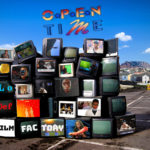
Many TV-watching South Africans remember the glorious hour each evening between 6 and 7pm when regular SABC programming would give way to M-NET’s Open Time – a channel one would otherwise have to pay for. Lo-Def Film Factory’s Open Time project was developed to create a framework for a group of young creatives across Cape Town to experiment with low-budget, lo-fi filmmaking from within their homes and communities. When in-person Digital Storytelling workshops were interrupted by the pandemic, mentorship and collaboration took place entirely over WhatsApp during lockdown. The filmmakers were equipped with basic filmmaking tools, resources, green screens and props to enable them to play with performing, directing, beat-making, voice-over, stop-motion animation and editing. This project is an eclectic collection of video to amuse and confound. Filmed entirely on phones, the work recreates the experience of channel-hopping, spanning the bizarre, the surreal and the chaotic – providing some much-needed ‘open time’ from the grief, fear and panic of the current moment.
Young Filmmakers:
Nathan Nkwamga
Paulina Bisala
Victor Jakara
Gomez Bakwene
Jeremiah Ndala
Lionel Zolo
Peacemore Patsika
Lisa Makumese
Milene Verwey
Nandi Tavares Calburn
Zia Francis
Quincy Vearey
Halo Verwey
Stembiso Sibanda

Jopolo: Spaceships from pre-colonial Africa – Dilman Dila

Jopolo is an interactive graphic novel that re-imagines ancient African stories about star travel, about people who came from the sky and about those who went up there. It is a non-linear story presented in a series of images and texts, which have links that enable a reader to jump from any point of one story to any point in another story. The root story is of a man whose wife dies, and in grief he sets off for the stars to search for her, but all stories present an image of ancient Africa as one steeped in science and technology. Jopolo borrows from a traditional view point of science, which is inseparable from animist philosophies and so the technologies that humans create to better their lives are those that do not harm the environment or lead to extinction of other life forms.


Introduction to 3D Animation in Blender – Bokang Koatja

The webinar will start with an introduction to available open source software for animation and visual development. Next will be an overview of the 12 principles of animation followed by a practical animation exercise using Blender 3D.

Credits:

Palamang Animation
Blender.org
Krita.org
Oliver Simonnet Creator of the MT-103 character rig
www.Blendernation.com

In Limbo – Providences

Dans les Limbes is an inner journey into the Internet, as if there was nothing left but the planetary network, dreaming of itself. It is a philosophical tale, the story of a spirit, voiced by Nancy Huston, who wakes up in the limbo of our interconnected global memory, and meets its strange life, inhabitants, pioneers (Google CEO or Internet founding fathers, like Ray Kurzweil, Gordon Bell, Brewster Kahle, Laurie Frick, Cathal Gurrin, etc).
While drifting into this giant memory, exploring its dreams and fears, she starts chasing the essence of nostalgia. Are we building a new cathedral, for a new civilization, or the biggest cemetery of our history?

Produced, written and directed by Antoine Viviani
Written with Jérémy André, Alain Damasio, Léa Todorov, Bojina Ponayatova
 Voice over: Nancy Huston
 Featuring: Gordon Bell, Cathal Gurrin, Raymond Kurzweil, Kevin Warwick, Paul Miller, Laurie Frieck, Liesl Capper, George Dyson
Editing: Pierre-Alain Giraud, Lucas Archambault
Sound editing and sound mixing: Raphael Hénard, Pierre Bariaud

Human Study #1 from a Distance – Ateliers Patrick Tresset

Human Study#1, 3RNP is an installation where the human becomes an actor. In a scene reminiscent of a life drawing class, the human takes the sitter’s role to be sketched by three robots. The machines, minimal stylised artists, are only capable of drawing obsessively. Their bodies are old school desks on which the drawing paper is pinned. The drawing sessions last 20 min, during which time the human cannot see the drawings in progress. The sitter only sees the robots alternating between observing and drawing, sometimes pausing. For the spectators, the sitter is an integral part of the installation.
The robots were initially developed by Tresset to palliate a debilitating painter’s block. Even if the way the robot draws is based on Tresset’s
technique, its style is not a pastiche but rather an interpretation influenced by the robot’s characteristics.
Tresset continually works on the computational system controlling the robot’s drawing behaviour, and for each exhibition, the systems are tuned again until they produce interesting drawings. Using autonomous
robots to draw from observation enables Tresset to further his exploration of the drawing practice.

Credit: Patrick Tresset